
The Complete Data Center Retail Investment Guide: Your 2030-2035 Roadmap to the AI Infrastructure Boom
This comprehensive guide covers everything retail investors need to know: from REITs like Equinix and Digital Realty, to infrastructure suppliers like Vertiv and Eaton, to small-cap power-shell arbitrage plays converting Bitcoin mining facilities into AI data centers.
Key Takeaways
- AI data center market projected to grow from $17B (2025) to $200B (2035)
- Power availability is the critical bottleneck driving investment opportunities
- Four strategies: REITs, infrastructure suppliers, power-shell arbitrage, power value chain
TL;DR: What You Need to Know
What are data centers? Buildings full of servers that power the internet, cloud computing, and AI. Think of them as the physical infrastructure behind every digital service you use.
Why the boom? AI models like ChatGPT require massive computational power. AI-ready facilities now routinely operate at 200 MW scale, with 1 GW campuses being planned.
The bottleneck: Power availability. Data centers need 100-500 megawatts of reliable electricity, and existing power grids can't keep up with demand.
How to invest:
- Safest play: Data center REITs like Equinix and Digital Realty (real estate landlords)
- Growth play: Infrastructure suppliers like Vertiv and Eaton (power and cooling equipment)
- Asymmetric play: Power-shell arbitrage (stranded megawatts being converted to AI infrastructure)
The risk: AI efficiency improvements could reduce demand growth. Technology obsolescence, regulatory restrictions, and customer concentration are real concerns.
Introduction: Why Data Centers Are the Investment Opportunity of the Decade
Every time you ask ChatGPT a question, stream a Netflix show, or upload a photo to the cloud, you're using a data center. These massive facilities are the physical backbone of our digital world, and right now, they're experiencing a historic shortage.
Market estimates vary by methodology, but the growth trajectory is clear. According to Precedence Research, the AI data center market is projected to grow from approximately $17.4 billion in 2025 to $197.6 billion by 2035, representing a compound annual growth rate approaching 28%. The broader data center infrastructure market is estimated to expand from $386.7 billion in 2025 to over $1.1 trillion by 2035.
But here's what makes this different from typical tech hype: data centers aren't just riding the AI wave. They're the fundamental infrastructure that makes AI possible. Without data centers, there is no ChatGPT, no self-driving cars, no cloud computing revolution. And right now, we're in the middle of a capacity crunch that's sending prices soaring.
This guide walks you through everything retail investors need to know about the data center boom, from the massive REITs managing billions in real estate to small-cap companies converting stranded power assets into AI infrastructure. We'll cover the obvious plays and the hidden gems, the risks and the rewards.
Part 1: Understanding Data Centers - The Physical Foundation of AI
What Exactly Are Data Centers?
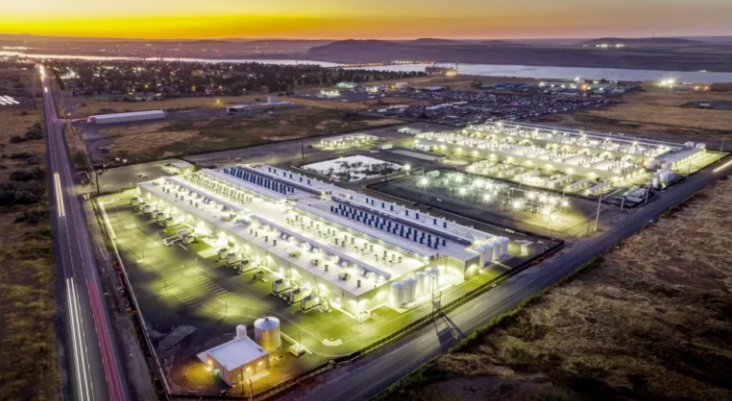
A data center is a building full of computers (servers) that store data and run software continuously. Modern data centers are essentially power plants that happen to run computers. A single large facility can consume 100 to 500 megawatts of electricity, equivalent to powering a small city.
There are several types that matter for investors:
Hyperscale Data Centers are the giants, typically operated by tech companies like Amazon, Microsoft, and Google. These facilities span over 100,000 square feet and handle cloud computing at enormous scale.
Colocation Data Centers are like landlords for the digital world. Companies like Equinix and Digital Realty own the physical space and rent it out to businesses that need data center capacity but don't want to build their own.
Edge Data Centers are smaller facilities located closer to end users, designed to reduce latency for applications that need split-second response times. These are critical for autonomous vehicles, AR/VR applications, and 5G networks.
AI-Specific Data Centers are the newest category, purpose-built for the extreme power and cooling demands of AI training and inference. These facilities can handle rack densities of 50 to 100+ kilowatts, compared to traditional data centers designed for 5 to 15 kilowatts per rack.
How AI Changed Everything in 2023-2024
Before ChatGPT launched in November 2022, the data center industry was growing steadily but predictably. Then everything changed. AI models like GPT-4 require thousands of high-end GPUs (graphics processing units) running simultaneously for weeks or months just to train a single model.
According to McKinsey research, by around 2030, approximately 70% of overall demand for data center capacity will require facilities capable of running advanced AI workloads, with approximately 40% of total demand driven by generative AI applications specifically. This represents a fundamental shift in what data centers need to deliver.
The hardware requirements created an immediate crisis: existing data centers couldn't support AI workloads without major retrofits. According to Goldman Sachs research, AI is projected to drive approximately 165% to 175% increase in data center power demand through 2030 (compared to 2023 baseline). Power demand is more than doubling, and the infrastructure to support it doesn't exist yet.
The Power Problem: Why Location Matters More Than Ever
You can't just build a data center anywhere. The three critical requirements are power, cooling, and connectivity. Power is the biggest bottleneck.
A typical AI data center needs access to 100 to 500 megawatts of reliable electricity. AI-ready facilities are now routinely planned at 200 MW scale, with some hyperscale campuses targeting 1 GW or more, according to McKinsey analysis. Securing that much power requires direct connections to electrical substations, long-term power purchase agreements, and in many cases, years of regulatory approvals.
Data center operators are getting creative. Some are buying land directly next to power plants. In March 2024, Amazon purchased a nuclear-powered data center campus from Talen Energy for $650 million, as reported by Reuters and nuclear industry publications. Others are exploring small modular reactors (SMRs), partnerships with renewable energy providers, and building their own power generation on-site.
The power constraints have created geographic winners and losers. Northern Virginia (particularly Loudoun County) has become a major data center hub due to available power infrastructure and fiber connectivity. Digital Realty holds approximately 15% of total U.S. leased datacenter power capacity, making it the largest provider nationally, according to S&P Global Market Intelligence 451 Research analysis. Other hot markets include Dallas, Phoenix, Atlanta, and international locations like Singapore and Frankfurt.
Cooling: The Hidden Challenge
Traditional data centers used air cooling, basically giant air conditioning systems. That worked when server racks consumed 5 to 15 kilowatts. But AI racks running at 50 to 100+ kilowatts produce so much heat that air cooling can't keep up.
This has forced the industry toward liquid cooling solutions, where coolant is pumped directly to components. The shift is happening quickly. The Uptime Institute projects that liquid cooling will be deployed in more than 35% of AI-centric data centers in 2025. This creates opportunities for companies like Vertiv, which manufactures thermal management systems designed for AI workloads.
Part 2: Three Ways to Invest in Data Centers
Before diving deep into specific companies, here's how retail investors can approach this opportunity:
Strategy 1: Own the Landlords (Data Center REITs)
Who: Equinix, Digital Realty
What they do: Own and operate data centers, leasing space to customers through long-term contracts (typically 3 to 10 years)
Why it works: Predictable cash flows, dividend income, exposure to secular growth without execution risk of building infrastructure
Risk profile: Lower volatility, steady income, moderate growth potential
Strategy 2: Own the Bottlenecks (Power & Cooling Suppliers)
Who: Vertiv, Eaton, Schneider Electric
What they do: Manufacture power distribution equipment, cooling systems, and infrastructure that every data center needs
Why it works: Benefit from capacity expansion regardless of which operators succeed; multiyear equipment replacement cycles
Risk profile: Moderate volatility, higher growth than REITs, cyclical exposure
Strategy 3: Power-Shell Arbitrage (Stranded Megawatts → AI Infrastructure)
Who: IREN, CIPHER, Core Scientific
What they do: Converting Bitcoin mining facilities (which already have power infrastructure and cooling) into AI data centers
Why it works: Existing power contracts + 2-3 year head start on traditional greenfield development = asymmetric value creation if executed
Risk profile: High volatility, Bitcoin correlation in short-term, massive upside if execution succeeds, meaningful downside if contracts don't materialize
Strategy 4: Own the Power Value Chain (The Hidden Winners)
Who: Utilities, grid equipment manufacturers, permitting specialists, energy storage providers
What they do: Enable the power delivery that makes data centers possible
Why it works: Data centers can't operate without grid infrastructure, transformers, substations, and reliable power supply
Risk profile: Varies by subsector; utilities offer stability, equipment suppliers offer growth
Part 3: The Big Players - REITs and Hyperscalers
The Hyperscalers: Microsoft, Amazon, Google
When we talk about data center demand, we're really talking about three companies: Microsoft, Amazon, and Google. These hyperscalers are spending enormous amounts on infrastructure.
In 2023, the combined capital expenditures of these three companies surpassed the entire U.S. oil and gas sector's capital investments. Microsoft announced in October 2024 plans to spend $4.46 billion expanding its cloud and AI data center infrastructure in Italy over two years.
Equinix: The Interconnection Leader
Equinix operates 260 data centers across 33 countries, focusing on interconnection. When you locate in an Equinix facility, you get direct connections to hundreds of other companies, cloud providers, and internet exchanges.
Why it matters: Equinix's ecosystem creates switching costs and tenant stickiness that commodity data centers can't match. Companies locate there not just for space, but for access to the network.
Financial performance: Revenue grew from $8.20 billion in 2023 to $8.74 billion in 2024. Equinix plans to spend $4 billion to $5 billion annually through 2029 to double capacity. Management reported that stabilized data centers generate 26% cash-on-cash returns on gross PP&E invested.
Digital Realty: The Wholesale Giant
Digital Realty operates over 300 data centers globally, specializing in wholesale facilities for hyperscalers. The company controls 15% of U.S. leased datacenter power capacity, the largest share nationally.
Why it matters: Digital Realty's wholesale model means larger lease transactions with hyperscalers, creating concentration risk but also massive scale advantages.
Financial performance: Digital Realty projected revenue between $5.6 billion and $5.7 billion for 2024, with core funds from operations (FFO) per share expected between $6.60 and $6.75. The company projects core FFO growth of approximately 5.8% for 2025.
Part 4: Infrastructure Suppliers - The Picks and Shovels Play
Vertiv: The Thermal Management Leader
Vertiv manufactures uninterruptible power supply (UPS) systems, power distribution units (PDUs), cooling systems, and integrated racks specifically designed for AI workloads.
Why it matters: The shift from air cooling to liquid cooling creates a multiyear equipment replacement cycle. Vertiv's liquid cooling solutions and partnership with NVIDIA position it at the center of this transition.
Financial indicators: Vertiv reported a 1.4x book-to-bill ratio and $7.2 billion in backlog, meaning orders are coming in faster than fulfillment capacity. Service contract renewal rates exceed 90%, indicating strong customer retention.
Eaton: The Power Management Diversifier
Eaton is a diversified industrial company with growing data center power management business. The company collaborates with NVIDIA on 800-volt direct current power architecture for AI data centers.
Why it matters: Eaton's busbar technology replaces traditional cables with rigid metal conductors, reducing power loss and improving efficiency for high-density AI racks.
The data center power market is projected to grow from $35.14 billion in 2025 to $50.51 billion by 2030, representing a CAGR of 7.5%, according to MarketsandMarkets.
Part 5: Power-Shell Arbitrage - The Small-Cap Asymmetric Play
The Thesis: Stranded Power Meets Desperate Demand
Here's where retail investors can find asymmetric opportunities. There's a group of small-cap companies that own something valuable: power contracts and data center facilities originally built for Bitcoin mining.
Bitcoin mining requires cheap electricity and cooling infrastructure. Those are the exact requirements for AI data centers. After Bitcoin's halving event in April 2024 (which cut mining rewards in half), many miners found themselves with expensive infrastructure that was suddenly less profitable. Meanwhile, AI companies were desperately searching for power capacity that traditional developers couldn't deliver for 2 to 3 years.
IREN: The Aggressive Pivotter
IREN, formerly Iris Energy, began as a Bitcoin miner but has aggressively pivoted to AI cloud infrastructure. In late 2025, IREN announced a $9.7 billion, five-year AI cloud services contract with Microsoft.
Key contract details:
- Total contract value: $9.7 billion over 5 years
- Capacity: 200 MW of IT load at Childress, Texas campus
- Deployment phased through 2026
- 20% customer prepayment structure
- Estimated $1.94 billion annualized run-rate revenue when fully deployed
Financial performance: IREN reported revenue of $501 million for fiscal year 2025, up 168% year-over-year, with net income of $86.9 million. The company recently paused Bitcoin mining expansion at 52 EH/s to focus entirely on AI infrastructure.
CIPHER: The Power-First Landlord
CIPHER Mining takes a different approach. While IREN deploys and operates GPUs, Cipher acts as a "power shell lessor," leasing data center facilities with power infrastructure but letting customers bring their own equipment.
Major contracts:
- Amazon Web Services: 15-year, $5.5 billion lease to deliver 300 MW of capacity starting in 2026
- Fluidstack (backed by Google): 10-year, $3 billion contract for 168 MW, later expanded with an additional $830 million for 56 MW
Total contracted revenue: Approximately $9.3 billion over contract terms.
The revenue reality: Cipher's revenue is almost entirely forward-looking. The company reported $72 million in revenue for Q3 2025, with a small net loss. AI data center revenue doesn't begin until late 2026.
Core Scientific: The Proof of Concept
Core Scientific proved the power-shell arbitrage thesis could work. Emerging from bankruptcy in 2024, Core Scientific signed contracts with CoreWeave totaling approximately $8.7 billion in revenue over 12 years for 500 MW of HPC infrastructure.
In July 2025, CoreWeave announced plans to acquire Core Scientific in an all-stock transaction valued at approximately $9 billion. However, in October 2025, the merger was terminated after failing to receive necessary shareholder votes.
Comparing the Small-Cap Plays
| Factor | IREN | CIPHER | CORZ |
|---|---|---|---|
| Business Model | AI cloud provider, owns GPUs | Power lessor, customers own equipment | Hosting provider for CoreWeave |
| Key Contract | $9.7B Microsoft (5 years) | $9.3B AWS + Fluidstack (10-15 years) | $8.7B CoreWeave (12 years) |
| Revenue Start | Already generating AI revenue | Late 2026 | Already generating hosting revenue |
| Capital Intensity | Very high (GPU purchases) | Moderate (infrastructure only) | Low to moderate (CoreWeave funded) |
Part 6: The Power Value Chain - Who Wins When Power Is the Constraint?
Why Grid Infrastructure Matters
Data centers can't operate without reliable power delivery. But power infrastructure takes years to build and faces regulatory bottlenecks. This creates opportunities in grid equipment, transformers, substations, and power generation.
According to McKinsey, power supply challenges are slowing data center expansion in key markets. Some utilities initially offer only 15 to 25 MW tranches for a 100 MW data center campus, forcing phased buildouts as transmission infrastructure catches up.
The Grid Equipment Winners
Transformers and Switchgear: Companies manufacturing high-voltage transformers, electrical switchgear, and substations benefit from data center grid connections. Lead times for large power transformers have extended to 18-24 months due to surging demand.
Behind-the-Meter Solutions: Some data centers are building their own power generation (fuel cells, batteries, renewables) to bypass grid constraints.
Interconnection and Permitting: Utilities and engineering firms specializing in grid interconnection and regulatory approvals gain leverage as data centers compete for limited grid capacity.
Part 7: The 2030-2035 Roadmap - Investment Milestones
Phase 1: The Buildout Era (2026-2028)
What's happening:
- Massive capacity expansion as hyperscalers race to deploy AI infrastructure
- Power procurement becomes the critical bottleneck, not just construction
- Liquid cooling transitions from experimental to standard for AI racks
- Small-cap power-shell arbitrage plays prove (or fail to prove) their business models
Key metrics to watch:
- Megawatts (MW) contracted vs. MW operational (delivery risk)
- Power purchase agreement (PPA) terms and pricing
- Grid interconnection queue positions and completion timelines
- Capital expenditure per MW (cost inflation signals)
Red flags:
- MW contracted without interconnection milestones achieved
- Customer concentration rising above 30-40% of revenue
- Capex per MW inflating faster than lease pricing can pass through
- Delivery delays relative to customer service level agreements (SLAs)
Phase 2: The Utilization Era (2029-2031)
What's happening:
- Capacity brought online in 2026-2028 reaches full utilization
- Lease renewals reveal true pricing power (or lack thereof)
- Power cost pass-through clauses get tested as electricity prices fluctuate
- Density upgrades (retrofitting for higher kW per rack) create second-wave capex
Red flags:
- Occupancy declining below 75-80% despite strong market demand
- Negative renewal spreads (customers paying less on renewal than initial lease)
- Power cost increases that can't be passed through to customers
- Customer churn above 15-20% on lease expirations
Phase 3: The Platform Shift Era (2032-2035)
What's happening:
- AI inference workloads (real-time usage) dominate over training workloads
- Sovereign AI data centers (government-owned national infrastructure) proliferate
- On-site power generation (SMRs, microgrids) becomes standard for large facilities
- Edge computing buildout accelerates for latency-sensitive applications
Part 8: Risks, Valuation, and Strategy
What Could Go Wrong?
The DeepSeek Shock: In January 2025, reports about DeepSeek AI (a Chinese company claiming highly capable models with fewer computational resources) sent data center stocks plummeting. NVIDIA dropped 17% in a single day on January 27, 2025, erasing approximately $589 billion in market cap. Digital Realty and Equinix fell 11% and 7% respectively.
What it means: Efficiency shocks can compress valuations temporarily, but demand growth can still rise if AI adoption accelerates.
Regulatory Risk: Data centers consume enormous power and water. In March 2025, Microsoft reportedly pulled back from approximately 2 gigawatts of planned commitments in the U.S., sending ripples through the sector.
Customer Concentration: Many operators rely on a small number of hyperscale customers. If Microsoft, Amazon, or Google significantly reduce expansion plans, the entire sector would feel the impact.
Investment Watchlist: KPI Dashboard
| Metric | What "Good" Looks Like | What Breaks the Thesis |
|---|---|---|
| MW Contracted | Growing 20%+ annually | Flat or declining y/y |
| Utilization Rate | 80-85%+ | <75% despite strong demand |
| Customer Concentration | Top 3 customers <30% | Single customer >40% |
| ROIC (REITs) | 15%+ | <8% |
| Backlog (Suppliers) | 1.2x+ book-to-bill | <0.8x (losing share) |
Portfolio Construction Guidelines
Conservative Allocation (lower volatility tolerance):
- 60-70% large-cap REITs (Equinix, Digital Realty)
- 20-30% infrastructure suppliers (Vertiv, Eaton)
- 10% diversification (ETFs, utilities, or selective small-caps)
Moderate Allocation (balanced approach):
- 40-50% REITs
- 30-40% infrastructure suppliers and hyperscalers
- 15-20% power-shell arbitrage small-caps
Aggressive Allocation (high volatility tolerance):
- 25-35% REITs
- 20-30% infrastructure suppliers
- 40-50% power-shell arbitrage and emerging opportunities
FAQ: Data Center Investing Questions Answered
Q: What is MW and why does it matter?
A: MW stands for megawatt, a measure of power capacity. One megawatt can power approximately 750 average American homes. In data centers, MW represents the electrical infrastructure available for servers. Investors track MW under contract, MW operational, and MW under construction as key growth indicators.
Q: What's the difference between hyperscale and colocation?
A: Hyperscale data centers are massive facilities typically owned by tech giants like Amazon, Microsoft, and Google for their own use. Colocation facilities are owned by REITs like Equinix and rented to multiple customers.
Q: Do AI efficiency gains kill the thesis?
A: Not necessarily. Even if individual AI models become more efficient, total AI usage could explode, offsetting efficiency gains. The DeepSeek shock in January 2025 showed that efficiency concerns can cause temporary valuation compression, but if AI adoption accelerates, total demand could still rise significantly.
Q: How do I know if a power-shell arbitrage play is legitimate?
A: Look for: (1) Signed contracts with reputable customers (AWS, Microsoft, CoreWeave), (2) Power purchase agreements already in place with clear pricing, (3) Construction progress on AI-ready facilities with liquid cooling infrastructure, (4) Management with data center experience, (5) Financial resources to complete the transition without dilutive financing.
Conclusion: The Infrastructure Play for the Next Decade
Data centers are the physical infrastructure behind every digital service we use. Right now, we're experiencing a capacity shortage driven by AI's explosive computational requirements.
Market estimates vary by methodology, but the growth trajectory is clear: the AI data center market is projected to grow from approximately $17.4 billion in 2025 to nearly $200 billion by 2035. Data center server spending could increase nearly 5x to approach $1 trillion by 2030. Power demand is rising 165-175% through 2030.
For retail investors, opportunities exist across the risk spectrum:
- Conservative: Established REITs like Equinix and Digital Realty with steady cash flows and dividends
- Moderate: Infrastructure suppliers like Vertiv and Eaton with growth potential
- Aggressive: Power-shell arbitrage plays like IREN and CIPHER with asymmetric upside
The key is understanding what you own and why. Companies will win and lose based on their ability to secure power, control costs, and deliver infrastructure on time. The power value chain creates multiple entry points for investors with different risk tolerances.
Choose wisely, diversify appropriately, and remember that volatility is the price you pay for potentially exceptional returns.
Key Takeaways:
- AI data centers face a capacity shortage with projected market growth from ~$17B (2025) to ~$200B (2035)
- Power availability is the critical bottleneck, driving opportunities for companies with existing infrastructure
- The 2030-2035 roadmap spans three phases: Buildout (2026-2028), Utilization (2029-2031), Platform Shift (2032-2035)
- Large-cap REITs offer stability with dividends and moderate growth potential
- Infrastructure suppliers provide exposure to the equipment buildout and replacement cycles
- Power-shell arbitrage (stranded MW → AI infrastructure) offers asymmetric upside with higher risk
- The power value chain (grid equipment, transformers, PPAs) creates additional investment opportunities
Disclaimer: This article is for informational purposes only and should not be considered financial advice. Stock investing involves significant risk, including potential loss of principal. Always conduct your own research and consult with a qualified financial advisor before making investment decisions. Past performance does not guarantee future results.
Recent Articles(9)
View AllWho Is Buying SpaceX at a $1.7 Trillion Valuation?
SpaceX is about to complete the largest IPO in history at a $1.7 trillion valuation, but a sum-of-the-parts analysis puts the company's intrinsic value closer to $350 to $780 billion. Here's why Starlink carries the entire business, why the price is really an AI bet, and what value investors should make of it.
NVTS Forecast 2030: Why Navitas Semiconductor Could Hit $500M (Or More)
Navitas Semiconductor (NVTS) generated $45.9 million in 2025 revenue while management targets a $3.5 billion serviceable market by 2030. Here's a probability-weighted look at where NVTS annual revenue could actually land in 2030, and why the stock has rallied nearly 1,000% in a year.
Will NVIDIA Stock Hit $300 in 2026? A Probability-Weighted Forecast
Can NVIDIA stock reach $300 by end of 2026? Three Wall Street banks say yes, with BofA at $320 and Tigress at $360. Here's the probability-weighted breakdown ahead of NVDA's Q1 FY2027 earnings on May 20.
Trump Just Disclosed Up to $750M in Q1 Stock Trades. The AI Infrastructure Pattern Is Hard to Ignore
President Trump disclosed more than 3,700 securities transactions worth up to $750 million in Q1 2026, with several buys landing one to two weeks before favorable regulatory decisions in those exact names. Here's what the AI infrastructure pattern signals for retail investors and where the second-derivative trade lives.
How to Track Smart Money: A Free Tool for Following Institutional Investors
Track 67 of the most-followed institutional investors managing $1.11 trillion in equities through SEC 13F filings. Our new free Superinvestor Tracker lets retail investors compare hedge fund and asset manager portfolios side by side without paying for a Bloomberg terminal.
Which Stock Will Be the First $6 Trillion Company?
Nvidia just closed at a $5.05 trillion market cap. Alphabet is hot on its heels at $4.80 trillion. The race to be the first $6 trillion company is closer than most retail investors realize, but the math still favors one name. Here is the realistic breakdown of who gets there first in 2026 and why.
RAM Prices Are Exploding: Inside the Great Memory Squeeze Wall Street Underestimated
DRAM contract prices surged 55-60% QoQ as AI demand permanently rewired the global memory market. Here are the top 10 memory makers by market share, which stocks win from the supercycle, and why server OEMs like Dell and HP are getting margin-crushed.
CoreWeave Just Locked In Meta and Anthropic in 48 Hours. Is CRWV a Buy in 2026?
CoreWeave locked in $21B from Meta and a multi-year Anthropic deal in 48 hours, pushing backlog to $87.8B. Is CRWV stock a buy in 2026? Here is the probability-weighted take.
How the Iran War Quietly Became the Biggest Threat to AI Infrastructure Stocks
The Iran war wasn't just an oil story, it was a stress test for AI infrastructure stocks. Here's how IREN, CoreWeave, Nebius, and Nvidia are really exposed to energy cost shocks, and which names look best positioned after the ceasefire.
About WSS Team
WallStSmart editorial team delivering professional financial analysis and market insights.
Follow on Twitter