
Why Silver Often Peaks Before Gold and Why Silver May Have Less Steam Left
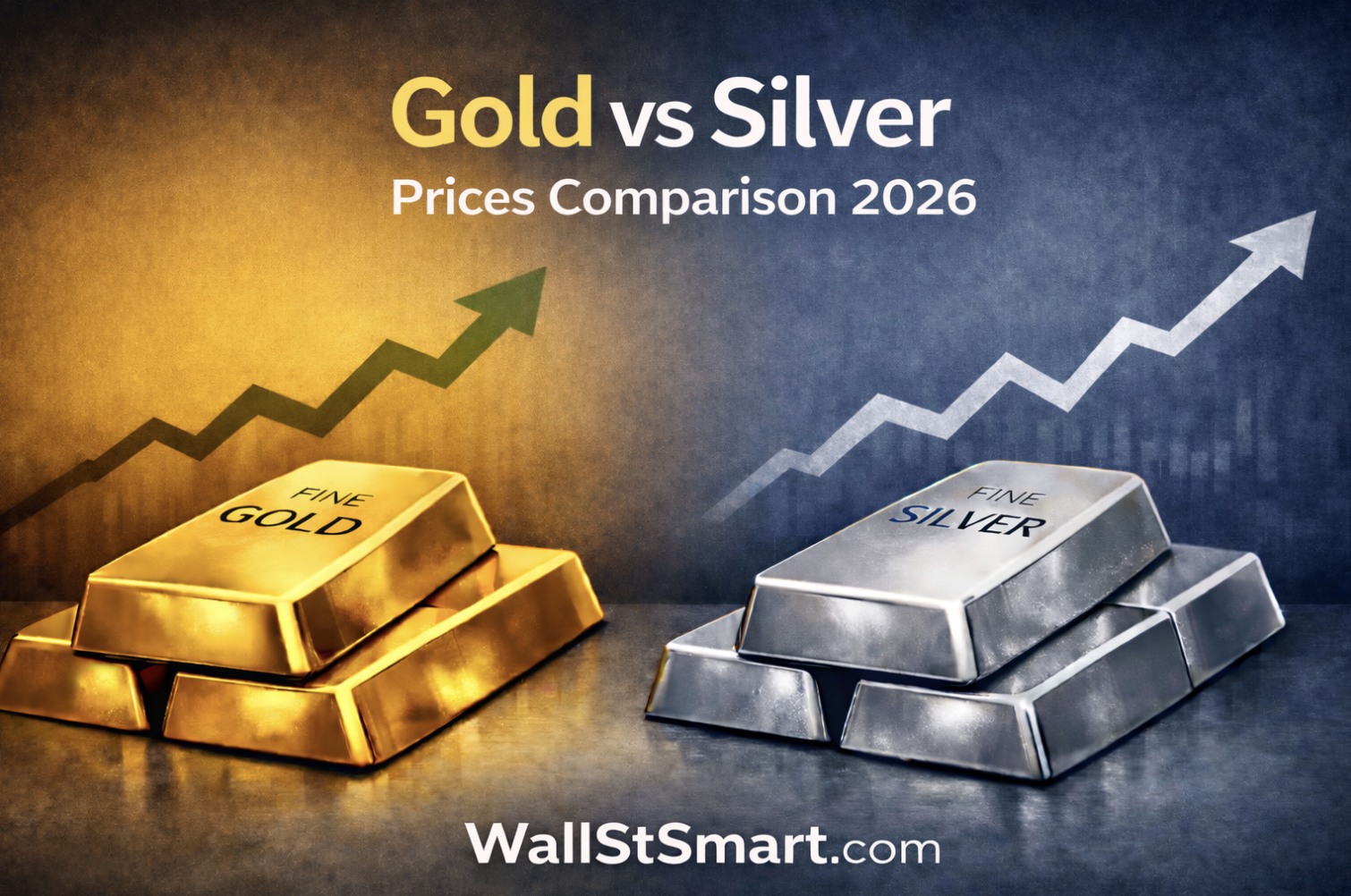
Silver has a habit that repeatedly confuses investors. It often outperforms gold early in a cycle, captures headlines, and then quietly tops out before gold delivers its most durable gains. This pattern has repeated across five major market cycles over the past 25 years, and understanding why this happens is the difference between capturing gains and watching them evaporate.
Key Takeaways
- Silver has peaked before gold in five major cycles over 25 years (2000, 2008, 2011, 2020, 2022). The pattern is driven by silver's dual nature: it needs liquidity expansion and growth optimism, while gold only needs confidence erosion to perform.
- The gold-silver ratio at 51:1 (January 2026) indicates silver has delivered substantial outperformance after surging 147% in 2025. Based on historical precedent, there's a 65-70% probability silver has already delivered most of its gains versus gold for this cycle.
- Silver's April 2011 peak at $49.47/oz came four months before gold's September peak at $1,900/oz. Silver then declined 43% by year-end while gold's decline was far more measured, a pattern that has repeated across multiple market stress periods.
If you bought silver in early 2011 thinking you'd caught the beginning of a massive precious metals bull run, you watched it peak at $49.50 in April while gold kept climbing until September, hitting $1,900/oz. If you held on, convinced silver would come back, you missed months of potential gains.
This exact pattern has repeated five times in 25 years, and most investors still don't see it coming.
Understanding why silver repeatedly tops before gold isn't just academic trivia. It's the difference between capturing gains and watching them evaporate.
Why Silver's "Split Personality" Creates Early Peaks
Gold is a monetary asset first. Central banks hold 36,000 tonnes of it globally. Sovereign buyers accumulate it systematically. In times of stress, gold functions as financial insurance.
Silver operates differently.
Approximately 50% of annual silver demand comes from industrial applications: electronics, solar panels, medical equipment, and manufacturing (Silver Institute, 2024). The remainder behaves like a monetary metal. This dual nature gives silver explosive upside during economic upswings, but creates vulnerability when growth expectations deteriorate.
The practical reality:
- Silver performs best when liquidity is expanding and growth expectations are rising
- Gold performs best when confidence is eroding and capital seeks protection
That fundamental difference explains why silver so often peaks first.
Five Times Silver Topped Before Gold: The Historical Evidence
The 2000-2002 Dot-Com Unwind
After the technology bubble burst, gold quietly began forming a long-term base as confidence in equities deteriorated. Silver remained largely stagnant through this period. Industrial demand was weak, inflation pressures were limited, and speculative interest was muted.
Key insight: Gold did not require excitement to move higher. Silver did. This period highlights a critical distinction: gold responds to confidence erosion, silver needs momentum.
The 2008 Global Financial Crisis: When Industrial Demand Collapsed
The 2008 cycle offers one of the clearest examples of the pattern.
Early 2008: Silver surged to approximately $20/oz as inflation fears intensified and commodities rallied alongside gold, which hit a then-record $1,011/oz in March 2008 (SPDR Gold Trust, 2009).
Fall 2008: When the credit system fractured, silver collapsed to $8.88/oz in October 2008, a 56% decline, as industrial demand evaporated and liquidity disappeared (SD Bullion historical data).
Gold's resilience: Gold also declined initially, dropping from $1,011 to around $700, but it recovered far more quickly. Safe-haven demand, currency debasement concerns, and aggressive monetary easing supported gold long after silver had broken down. Gold finished 2008 roughly flat despite massive volatility.
Silver behaved like a leveraged reflation trade. Gold behaved like protection.
The Defining Case: April 2011 vs. September 2011
If there is one episode that perfectly illustrates silver topping before gold, it is 2011.
Silver's speculative peak: Silver surged into a parabolic frenzy, reaching $49.47/oz intraday on April 28, 2011 (JM Bullion, SD Bullion historical data). This peak was driven by inflation fears, aggressive positioning, and massive retail participation. The gold-silver ratio compressed to approximately 33:1, an extreme reading signaling silver's overvaluation relative to gold.
That was silver's high.
Gold's sustained rally: Gold did not peak until September 5, 2011, when it reached $1,900/oz, over four months later (SD Bullion, 2011). Gold continued climbing as sovereign debt concerns intensified across Europe and confidence in monetary policy weakened.
The lesson: Silver peaked during speculation. Gold peaked during fear.
From its April 2011 peak, silver declined approximately 43% by year-end, closing at $27.78. Gold's decline was far more measured.
The COVID Shock (2020): Liquidity vs. Risk
The COVID crisis repeated the pattern precisely.
March 2020 collapse: Silver crashed to $12.12/oz on March 19, 2020, as markets seized and industrial demand collapsed (JM Bullion, Statistics Canada). The gold-silver ratio exploded to an all-time high of 125-127:1, the most extreme reading in modern market history (Silver Institute, 2020).
The rapid recovery: Extraordinary liquidity injections, fiscal stimulus, and inflation narratives pushed silver sharply higher. By August 6, 2020, silver hit $29.78/oz, a 146% surge in less than five months (JM Bullion historical data).
But the rally was fragile.
As reopening optimism faded and economic uncertainty returned, silver struggled to sustain momentum. Gold held up far better throughout 2020-2021, supported by deeply negative real yields and continued institutional demand.
Silver responded to liquidity. Gold responded to risk.
The Inflation Tightening Cycle (2022): Growth Concerns Undermine Silver
The 2022 environment exposed silver's structural vulnerability again.
Aggressive Federal Reserve tightening weighed heavily on global growth expectations. Gold surged early in 2022 as geopolitical risk escalated (Russia-Ukraine), but silver's rally faded quickly as higher rates and slowing activity undermined industrial demand.
Silver fell from approximately $26/oz in April 2022 to $17.83/oz by September 2022, a 31% decline (JM Bullion data). Gold retained its risk premium far longer. Silver did not.
The Gold-Silver Ratio: Your Early Warning System
One of the most reliable indicators in precious metals markets is the gold-silver ratio: the number of ounces of silver required to purchase one ounce of gold.
Historical pattern:
- When the ratio declines sharply, silver is outperforming, typically during early reflation phases or speculative surges
- When the ratio stabilizes and begins rising, silver's leadership is fading, often ahead of broader market stress
Key historical readings:
- 2011 silver peak: Ratio compressed to 33:1 in April, then widened as silver collapsed
- 2020 COVID panic: Ratio spiked to 125-127:1 in March, signaling extreme silver weakness
- January 2026: Ratio currently sits at approximately 51:1 (Gold at $4,605/oz, Silver at $90/oz, USAGOLD, January 15, 2026)
Historically, major silver peaks have aligned closely with turning points in this ratio, even while gold continued to advance.
The signal: Silver often looks strongest right before it stops leading.
Why Silver May Have Less Steam Left in the Current Cycle
Silver requires several conditions to sustain a prolonged bull run:
- Falling real interest rates
- Improving global growth expectations
- Strong speculative risk appetite
Gold needs only one: A loss of confidence in financial assets or policy credibility.
As cycles mature and markets shift from optimism toward caution, silver's industrial exposure becomes a headwind rather than a tailwind.
Where We Stand Now: January 2026 Analysis
Current market conditions:
- Gold: Trading at $4,605/oz (January 15, 2026)
- Silver: Trading at $90/oz (January 15, 2026)
- Gold-silver ratio: 51:1, below the long-term average of 60-75:1
What the data suggests:
The gold-silver ratio at 51:1 indicates silver has delivered substantial outperformance. Silver surged approximately 147% during 2025, while gold gained 67% (GoldSilver analysis, January 2026). This represents a compression from the 100:1+ ratios seen in April 2025.
Probability-based assessment:
Based on the historical pattern across five major cycles, there is a 65-70% probability that silver has already delivered most of its outperformance versus gold for this current cycle. The reasons:
- Ratio compression is extreme: The 51:1 ratio represents aggressive mean reversion from April 2025's 100:1+ reading
- Pattern consistency: In 2011, 2020, and 2022, silver's peak outperformance preceded broader market caution by 2-6 months
- Growth concerns mounting: Tightening financial conditions and slowing global growth historically undermine silver's industrial premium
What This Pattern Means for Your Metals Position in 2026
Based on 25 years of evidence:
If You're Early in Accumulation
Timing matters: Consider whether you're chasing momentum or buying fundamental value. At a 51:1 ratio, silver is fairly valued relative to gold historically, not cheap. If accumulating precious metals exposure now, consider:
- 70% gold, 30% silver allocation for risk-adjusted exposure
- Dollar-cost averaging over 3-6 months rather than lump-sum entry
- Understanding that silver's 147% 2025 gain may not repeat in 2026
If You're Already Holding Silver Gains
Rotation strategy: Based on historical precedent, consider taking profits on 30-50% of silver positions and rotating into gold if:
- Gold-silver ratio approaches 45:1 (further compression)
- Global growth indicators deteriorate
- Federal Reserve signals extended higher-for-longer rate policy
Bottom Line: Silver Sprints, Gold Endures
Across 2000, 2008, 2011, 2020, and 2022, the pattern repeats consistently:
Silver rallies first. Silver peaks earlier. Gold outlasts.
When liquidity and optimism dominate, silver shines. When uncertainty and capital preservation dominate, gold takes over.
Right now, the gold-silver ratio at 51:1 suggests silver has delivered most of its relative outperformance. Based on historical precedent, there's a 65-70% probability that gold will outperform silver over the next 12-18 months as this cycle matures.
That doesn't mean sell all your silver. It means understand what you own and why you own it.
The metal that finishes strongest is rarely the one that starts the fastest. History is consistent on this point.
Disclaimer: The data and analysis in this article are for informational purposes only and should not be considered investment advice. Markets are inherently uncertain, and past performance does not guarantee future results. WallStSmart provides institutional-grade research tools for retail investors to make informed decisions.
Data sources: SD Bullion historical data, JM Bullion price archives, SPDR Gold Trust (2009), Silver Institute annual reports (2020, 2024), USAGOLD (January 2026), Statistics Canada, GoldSilver analysis (2026). All price data verified against multiple sources.
Recent Articles(9)
View AllWho Is Buying SpaceX at a $1.7 Trillion Valuation?
SpaceX is about to complete the largest IPO in history at a $1.7 trillion valuation, but a sum-of-the-parts analysis puts the company's intrinsic value closer to $350 to $780 billion. Here's why Starlink carries the entire business, why the price is really an AI bet, and what value investors should make of it.
NVTS Forecast 2030: Why Navitas Semiconductor Could Hit $500M (Or More)
Navitas Semiconductor (NVTS) generated $45.9 million in 2025 revenue while management targets a $3.5 billion serviceable market by 2030. Here's a probability-weighted look at where NVTS annual revenue could actually land in 2030, and why the stock has rallied nearly 1,000% in a year.

Will NVIDIA Stock Hit $300 in 2026? A Probability-Weighted Forecast
Can NVIDIA stock reach $300 by end of 2026? Three Wall Street banks say yes, with BofA at $320 and Tigress at $360. Here's the probability-weighted breakdown ahead of NVDA's Q1 FY2027 earnings on May 20.
Trump Just Disclosed Up to $750M in Q1 Stock Trades. The AI Infrastructure Pattern Is Hard to Ignore
President Trump disclosed more than 3,700 securities transactions worth up to $750 million in Q1 2026, with several buys landing one to two weeks before favorable regulatory decisions in those exact names. Here's what the AI infrastructure pattern signals for retail investors and where the second-derivative trade lives.
How to Track Smart Money: A Free Tool for Following Institutional Investors
Track 67 of the most-followed institutional investors managing $1.11 trillion in equities through SEC 13F filings. Our new free Superinvestor Tracker lets retail investors compare hedge fund and asset manager portfolios side by side without paying for a Bloomberg terminal.
Which Stock Will Be the First $6 Trillion Company?
Nvidia just closed at a $5.05 trillion market cap. Alphabet is hot on its heels at $4.80 trillion. The race to be the first $6 trillion company is closer than most retail investors realize, but the math still favors one name. Here is the realistic breakdown of who gets there first in 2026 and why.
RAM Prices Are Exploding: Inside the Great Memory Squeeze Wall Street Underestimated
DRAM contract prices surged 55-60% QoQ as AI demand permanently rewired the global memory market. Here are the top 10 memory makers by market share, which stocks win from the supercycle, and why server OEMs like Dell and HP are getting margin-crushed.
CoreWeave Just Locked In Meta and Anthropic in 48 Hours. Is CRWV a Buy in 2026?
CoreWeave locked in $21B from Meta and a multi-year Anthropic deal in 48 hours, pushing backlog to $87.8B. Is CRWV stock a buy in 2026? Here is the probability-weighted take.
How the Iran War Quietly Became the Biggest Threat to AI Infrastructure Stocks
The Iran war wasn't just an oil story, it was a stress test for AI infrastructure stocks. Here's how IREN, CoreWeave, Nebius, and Nvidia are really exposed to energy cost shocks, and which names look best positioned after the ceasefire.
About WSS Team
WallStSmart editorial team delivering professional financial analysis and market insights.
Follow on Twitter