
Berkshire Hathaway's $4.3B Alphabet Bet: Warren Buffett Finally Bought Google Stock
Warren Buffett's Berkshire Hathaway invested $4.3 billion in Alphabet stock during Q3 2025. After decades of regret, why buy Google now? The answer lies in Gemini's AI comeback and a dramatic shift in the competitive landscape.
Key Takeaways
- Berkshire Hathaway invested $4.3 billion in Alphabet during Q3 2025, acquiring 17.85 million shares at an average price of $209. The stock has since surged to $330, representing a 50% gain in just a few months. Investment managers Todd Combs and Ted Weschler likely initiated the purchase rather than Warren Buffett himself.
- Google's Gemini has surged from 5.4% to 18.2% AI market share over the past year, while ChatGPT's dominance dropped from 87.2% to 68%. Gemini's monthly active users grew from 450 million to 650 million (44% growth in three months), leveraging distribution through Android, Chrome, Gmail, and Workspace that OpenAI cannot replicate.
- Alphabet reported Q3 2025 revenue of $102.3 billion (up 16% YoY), marking its first $100 billion quarter. Google Cloud revenue jumped 34% to $15.2 billion with operating margin expanding from 17.1% to 23.7%. Cloud backlog hit $155 billion, an 82% YoY increase, with the company signing more billion-dollar deals in nine months than the previous two years combined.
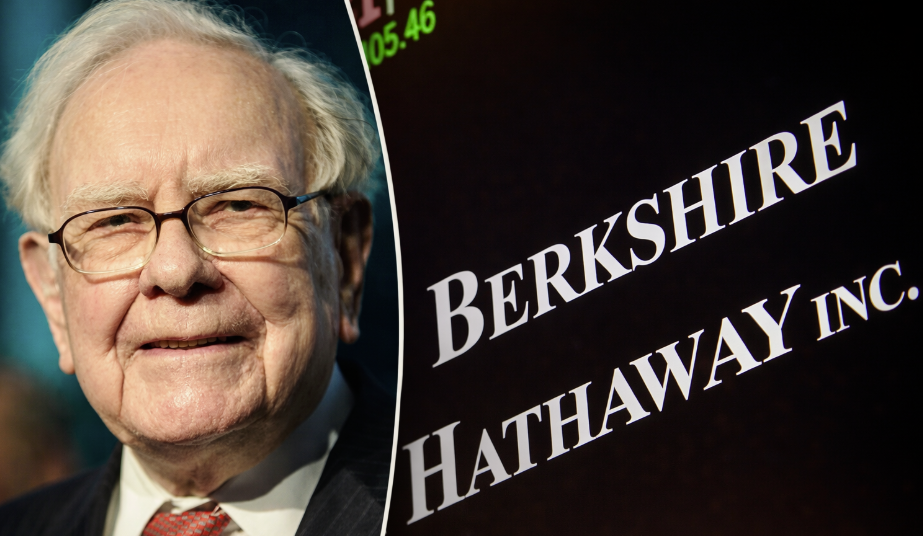
Warren Buffett spent years publicly regretting not buying Google. Now, in his final quarter as Berkshire Hathaway's CEO, his company finally pulled the trigger on a $4.3 billion stake in Alphabet. After missing the boat for two decades, why buy Google stock now?
The timing reveals something important about where Alphabet stands in the AI battle reshaping tech. And it's not the narrative most investors expect.
Berkshire Finally Bites on Alphabet Stock After Years of Regret
Berkshire Hathaway disclosed a $4.3 billion position in Alphabet during Q3 2025, acquiring 17.85 million shares and making the Google parent its 10th largest equity holding. The purchase came at an average price around $209 per share, according to the 13F filing submitted in November 2025.
What makes this move remarkable isn't just the size. Buffett has been kicking himself over not buying Google for decades. At Berkshire's 2019 annual shareholders meeting, Charlie Munger admitted he felt "like a horse's ass for not identifying Google better," while Buffett acknowledged that Berkshire's insurance subsidiary GEICO was paying Google for advertising that was clearly working.
They watched Google print money for their own business and still didn't invest. That's the kind of mistake that haunts value investors.
Buffett probably didn't make this purchase though. At 95 years old and stepping down as CEO at the end of 2025, Buffett has delegated most stock picking to his investment managers Todd Combs and Ted Weschler. These portfolio managers likely green-lit the Alphabet investment, similar to how Berkshire's Amazon position was initiated. Greg Abel, who officially became CEO on January 1, 2026, may have also signed off on the deal.
The distinction matters because it signals a generational shift in how Berkshire evaluates tech companies.
The AI Comeback That Changed Everything
When Berkshire bought in Q3 2025, Alphabet was trading around $209. The stock is now hovering near $330 in January 2026, representing a roughly 50% gain in just a few months. Alphabet's stock surged 65% in 2025, dramatically outpacing the broader Nasdaq, driven primarily by its AI comeback story.
For years, the narrative was that Google got caught flat-footed by ChatGPT. OpenAI launched its chatbot in late 2022, and suddenly Google's search dominance looked vulnerable. The company faced the classic innovator's dilemma: embrace AI chatbots and potentially cannibalize its cash cow search business, or protect search revenue and risk getting disrupted entirely.
By early 2026, the AI market share data tells a dramatically different story. Google's Gemini has surged from 5.4% market share to 18.2% over the past year, while ChatGPT's dominance has dropped from 87.2% to 68%. That 19-point decline in ChatGPT's market share represents the most significant competitive shift in generative AI history.
Google isn't just catching up. It's leveraging distribution advantages that OpenAI simply can't replicate. Gemini is baked into Android, Chrome, Gmail, Google Workspace, and Search itself. You don't need to download an app or create an account. It's just there, ready to use, for billions of people globally.
Alphabet's financial performance shows the AI investments are translating to real revenue. In Q3 2025, Alphabet reported $102.3 billion in revenue (up 16% year-over-year), marking its first $100 billion quarter ever. Google Cloud revenue jumped 34% to $15.2 billion, with operating margin expanding from 17.1% to 23.7%.
The Cloud backlog tells you where this is heading. Google Cloud's backlog hit $155 billion, an 82% year-over-year increase, with the company signing more billion-dollar deals in the first nine months of 2025 than in the previous two years combined.
Google vs ChatGPT: Distribution Matters More Than Quality
The AI market isn't winner-take-all, but distribution matters more than most investors realize.
ChatGPT has roughly 800 million weekly active users, which is genuinely massive. But only about 5% of those users maintain paid subscriptions to ChatGPT Plus or higher tiers, and subscription growth has plateaued across major European markets since May 2025. That's a monetization problem.
Google doesn't have that problem. Gemini sits inside products that already generate revenue. It enhances Search, drives more cloud contracts, and increases engagement across YouTube and Workspace. Gemini's monthly active user base expanded from 450 million in July 2025 to 650 million by October, representing 44% growth in just three months.
Microsoft's Copilot provides a cautionary tale about why distribution alone isn't enough. Despite being pre-installed in Windows and Edge, Copilot's market share stagnated from 1.5% to 1.2% over the past year. Google is winning because it's combining distribution with actual product quality that users trust.
The competitive dynamics have shifted so dramatically that OpenAI CEO Sam Altman issued an internal "code red" memo in December 2025, instructing teams to focus on personalization, reliability, and image generation areas where Gemini has gained ground.
Should You Follow Berkshire Into Alphabet Stock?
Berkshire has $381.7 billion in cash sitting on the sidelines. Finding investments large enough to move the needle is genuinely difficult when you're managing nearly $300 billion in equities. Alphabet, with a market cap near $4 trillion, is one of the few stocks big enough to absorb a multi-billion-dollar position without Berkshire owning too large a percentage.
The Alphabet purchase could simply be a cash deployment strategy. It's a company with strong fundamentals, growing revenue, expanding margins, and a more reasonable valuation than many tech peers. At around 31x trailing earnings, Alphabet trades at a discount to the typical Magnificent Seven multiple.
But there's also a genuine investment thesis beyond parking cash. Alphabet has proven it can compete in AI without destroying its core business. Search revenue is growing, not shrinking. YouTube remains the dominant streaming platform. Cloud is accelerating. And Waymo is extending its lead in autonomous vehicles.
The risks haven't disappeared. Regulatory pressure on Google's search monopoly continues, though the company is appealing recent antitrust decisions. The AI landscape remains unpredictable, and another technological shift could emerge. Capital expenditures are rising significantly, with Alphabet guiding for $91-93 billion in CapEx for 2025.
For retail investors, following Berkshire into Alphabet makes sense if you believe Google can maintain its competitive position in both search and AI. The company has demonstrated execution ability that should quiet the critics who claimed it was too slow to respond to ChatGPT. With strong free cash flow generation, a diversified business model beyond advertising, and improving Cloud profitability, Alphabet offers a more balanced risk-reward profile than many pure-play AI stocks.
Just remember: Berkshire bought at $209, and the stock is now around $330. The easy money from this trade might already be on the table.
Disclaimer: This article is for informational purposes only and should not be considered financial advice. Stock investing involves significant risk, including potential loss of principal. Always conduct your own research and consult with a qualified financial advisor before making investment decisions.
Recent Articles(9)
View AllWho Is Buying SpaceX at a $1.7 Trillion Valuation?
SpaceX is about to complete the largest IPO in history at a $1.7 trillion valuation, but a sum-of-the-parts analysis puts the company's intrinsic value closer to $350 to $780 billion. Here's why Starlink carries the entire business, why the price is really an AI bet, and what value investors should make of it.
NVTS Forecast 2030: Why Navitas Semiconductor Could Hit $500M (Or More)
Navitas Semiconductor (NVTS) generated $45.9 million in 2025 revenue while management targets a $3.5 billion serviceable market by 2030. Here's a probability-weighted look at where NVTS annual revenue could actually land in 2030, and why the stock has rallied nearly 1,000% in a year.
Will NVIDIA Stock Hit $300 in 2026? A Probability-Weighted Forecast
Can NVIDIA stock reach $300 by end of 2026? Three Wall Street banks say yes, with BofA at $320 and Tigress at $360. Here's the probability-weighted breakdown ahead of NVDA's Q1 FY2027 earnings on May 20.
Trump Just Disclosed Up to $750M in Q1 Stock Trades. The AI Infrastructure Pattern Is Hard to Ignore
President Trump disclosed more than 3,700 securities transactions worth up to $750 million in Q1 2026, with several buys landing one to two weeks before favorable regulatory decisions in those exact names. Here's what the AI infrastructure pattern signals for retail investors and where the second-derivative trade lives.
How to Track Smart Money: A Free Tool for Following Institutional Investors
Track 67 of the most-followed institutional investors managing $1.11 trillion in equities through SEC 13F filings. Our new free Superinvestor Tracker lets retail investors compare hedge fund and asset manager portfolios side by side without paying for a Bloomberg terminal.
Which Stock Will Be the First $6 Trillion Company?
Nvidia just closed at a $5.05 trillion market cap. Alphabet is hot on its heels at $4.80 trillion. The race to be the first $6 trillion company is closer than most retail investors realize, but the math still favors one name. Here is the realistic breakdown of who gets there first in 2026 and why.
RAM Prices Are Exploding: Inside the Great Memory Squeeze Wall Street Underestimated
DRAM contract prices surged 55-60% QoQ as AI demand permanently rewired the global memory market. Here are the top 10 memory makers by market share, which stocks win from the supercycle, and why server OEMs like Dell and HP are getting margin-crushed.
CoreWeave Just Locked In Meta and Anthropic in 48 Hours. Is CRWV a Buy in 2026?
CoreWeave locked in $21B from Meta and a multi-year Anthropic deal in 48 hours, pushing backlog to $87.8B. Is CRWV stock a buy in 2026? Here is the probability-weighted take.
How the Iran War Quietly Became the Biggest Threat to AI Infrastructure Stocks
The Iran war wasn't just an oil story, it was a stress test for AI infrastructure stocks. Here's how IREN, CoreWeave, Nebius, and Nvidia are really exposed to energy cost shocks, and which names look best positioned after the ceasefire.
About WSS Team
WallStSmart editorial team delivering professional financial analysis and market insights.
Follow on Twitter