
AI Data Centers Are Creating Six-Figure Jobs for Plumbers and Electricians
While AI threatens white-collar jobs, it's creating a massive boom in skilled trades. Nvidia's CEO says plumbers and electricians are commanding six-figure salaries as companies race to build $7 trillion worth of data centers. No college degree required.
Key Takeaways
- Tech companies plan to spend $7 trillion on data centers by decade's end, with $85 trillion over 15 years.
- US needs 130,000 electricians, 240,000 construction laborers, and 150,000 supervisors by 2030.
- Skilled trade salaries have nearly doubled while AI threatens 50% of entry-level white-collar jobs.
While everyone's losing sleep over ChatGPT taking their desk job, there's a plot twist nobody saw coming. The AI boom isn't just reshaping white-collar work, it's creating a massive demand for skilled tradespeople who can actually build the infrastructure that runs all this fancy technology. And they're getting paid better than most college graduates.
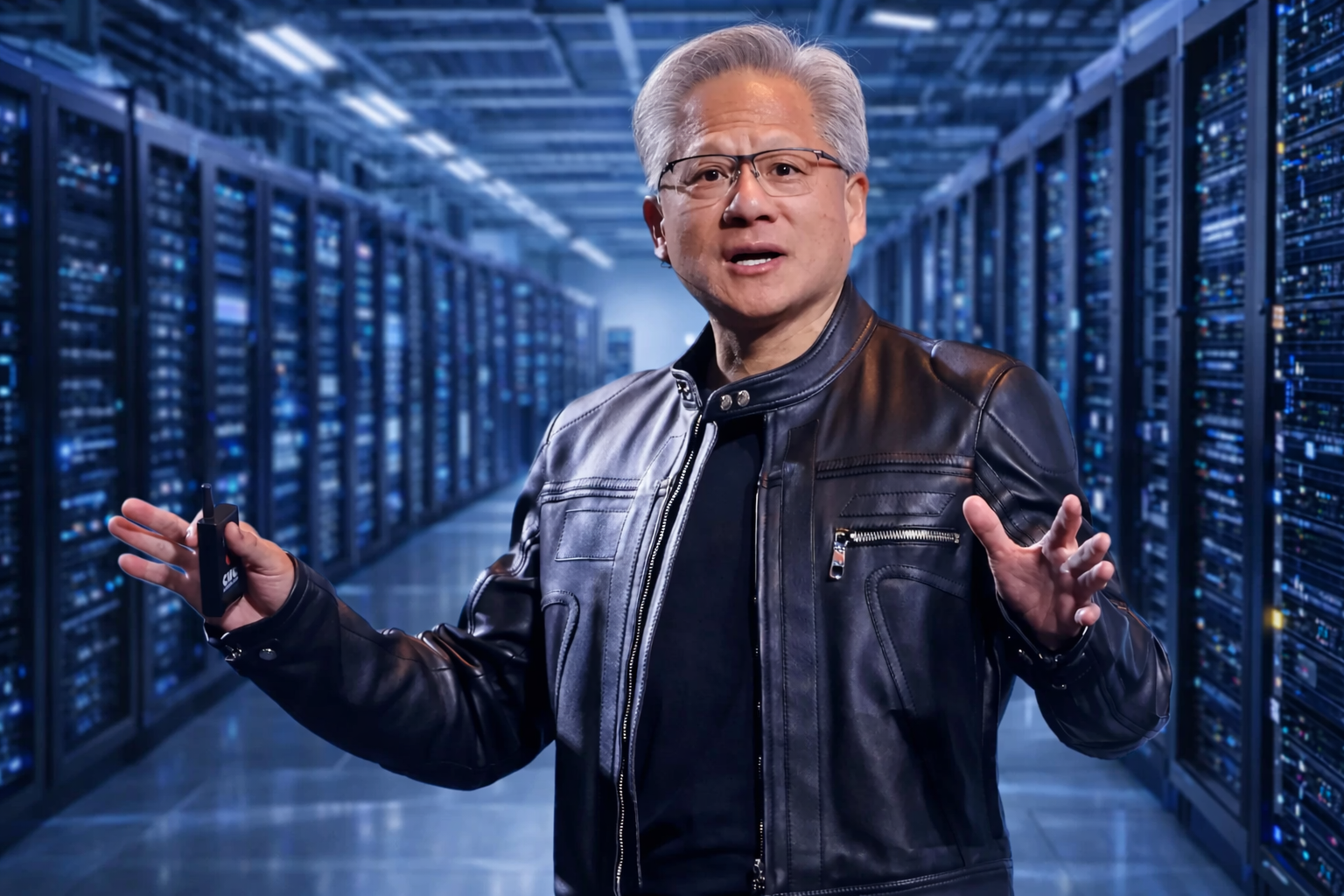
Nvidia CEO Jensen Huang just told the crowd at Davos what's really happening on the ground. Speaking at the World Economic Forum, he made it clear that plumbers, electricians, and construction workers are about to see six-figure salaries thanks to the data center building frenzy. His message to workers was straightforward: "Everybody should be able to make a great living. You don't need to have a Ph.D. in computer science to do so."
The Infrastructure Boom Nobody's Talking About
Here's the scale we're dealing with. Tech companies are planning to spend roughly $7 trillion on data centers by the end of the decade, according to McKinsey research. That's not a typo. Huang called it "the largest infrastructure buildout in human history" during his interview with Fox Business, estimating $85 trillion in total investment over the next 15 years. Major tech firms have already committed $500 billion in data center leases for the coming years, locking in capacity before it even exists.
Every ChatGPT query, every AI image generator, every automated customer service bot needs massive computing power housed in physical buildings that require real construction. Someone has to wire these facilities, install the cooling systems, and make sure the plumbing works when you're running thousands of high-powered chips that generate insane amounts of heat.
What makes this particularly interesting is that Huang says salaries in these trades have nearly doubled already, with workers commanding compensation that would make most office workers jealous. BlackRock CEO Larry Fink put it even more bluntly at the same conference: "We're going to run out of electricians that we need to build out AI data centers." Not might run out, will run out.
The Numbers Tell a Wild Story
The shortage is real and it's happening right now. Between 2023 and 2030, the US needs an additional 130,000 trained electricians just to keep up with demand, according to McKinsey's workforce projections. Add another 240,000 construction laborers and 150,000 construction supervisors to that list. The Bureau of Labor Statistics projects electrician jobs will grow 9% over the next decade, which is faster than average for most occupations and doesn't even account for the AI infrastructure surge that's still accelerating.
Meanwhile, Ford CEO Jim Farley has been sounding the alarm that AI could replace half of all white-collar workers while the country faces a shortage of 600,000 factory workers and 500,000 construction workers. The technology threatening office jobs is simultaneously creating a boom in the trades that guidance counselors told an entire generation to avoid, which creates one of the stranger economic contradictions we've seen in recent memory.
For investors watching how this plays out, the Nvidia stock story goes way beyond chip sales. The company is on track for nearly $200 billion in data center chip revenue last year alone, but the real economic impact ripples through construction, utilities, and industrial suppliers. Companies providing the physical infrastructure for AI are seeing demand they've never experienced before, and the bottleneck isn't chips anymore, it's the human workers needed to install them.
The Education System Missed This Completely
There's something darkly funny about the timing here. We pushed everyone toward four-year degrees and white-collar careers right before AI got good enough to automate a lot of that work. Now the "blue-collar" jobs people looked down on are paying better than many entry-level professional positions and they're way harder to automate. You can't ChatGPT your way through installing electrical systems in a data center that pulls more power than a small town.
The skills gap isn't happening by accident. We've spent decades telling kids that college is the only path to success while enrollment in trade schools declined. Now we're paying the price with massive shortages in exactly the workers we need most. Some 19-year-old who went to trade school instead of racking up $100K in student debt is probably out-earning their college friends who majored in business or communications, and they're not worried about AI taking their job anytime soon.
What This Means for the Job Market
The tension between what's happening in white-collar versus blue-collar work is creating a weird moment in the economy. Anthropic CEO Dario Amodei warned about a potential "white-collar bloodbath" at the same Davos conference, estimating that AI could eliminate 50% of entry-level professional jobs. He's not exaggerating when you look at how AI is already handling tasks that used to employ armies of junior analysts and entry-level marketers.
But skilled trades face the opposite situation entirely. You need human hands and human judgment to run electrical conduit, troubleshoot HVAC systems, or manage construction timelines. The physical world still requires physical work, and the AI boom is dramatically increasing how much of that work needs doing while making the workers who can do it increasingly valuable.
For stocks tied to AI infrastructure like data center REITs or industrial companies, this labor shortage could actually become a limiting factor on growth. You can manufacture more chips, but if you can't find enough electricians to wire up the buildings, your expansion plans hit a wall regardless of how much capital you have to deploy.
The opportunity is real, but so is the challenge. This isn't about everyone dropping what they're doing to become a plumber. It's about recognizing that the traditional career hierarchy just got flipped on its head, and the market is rewarding skills we've undervalued for way too long. Whether you're planning your career or your portfolio, that's worth paying attention to.
Disclaimer: This article is for informational purposes only and should not be considered financial advice. Stock investing involves significant risk, including potential loss of principal. Always conduct your own research and consult with a qualified financial advisor before making investment decisions.
Recent Articles(9)
View AllWho Is Buying SpaceX at a $1.7 Trillion Valuation?
SpaceX is about to complete the largest IPO in history at a $1.7 trillion valuation, but a sum-of-the-parts analysis puts the company's intrinsic value closer to $350 to $780 billion. Here's why Starlink carries the entire business, why the price is really an AI bet, and what value investors should make of it.
NVTS Forecast 2030: Why Navitas Semiconductor Could Hit $500M (Or More)
Navitas Semiconductor (NVTS) generated $45.9 million in 2025 revenue while management targets a $3.5 billion serviceable market by 2030. Here's a probability-weighted look at where NVTS annual revenue could actually land in 2030, and why the stock has rallied nearly 1,000% in a year.
Will NVIDIA Stock Hit $300 in 2026? A Probability-Weighted Forecast
Can NVIDIA stock reach $300 by end of 2026? Three Wall Street banks say yes, with BofA at $320 and Tigress at $360. Here's the probability-weighted breakdown ahead of NVDA's Q1 FY2027 earnings on May 20.
Trump Just Disclosed Up to $750M in Q1 Stock Trades. The AI Infrastructure Pattern Is Hard to Ignore
President Trump disclosed more than 3,700 securities transactions worth up to $750 million in Q1 2026, with several buys landing one to two weeks before favorable regulatory decisions in those exact names. Here's what the AI infrastructure pattern signals for retail investors and where the second-derivative trade lives.
How to Track Smart Money: A Free Tool for Following Institutional Investors
Track 67 of the most-followed institutional investors managing $1.11 trillion in equities through SEC 13F filings. Our new free Superinvestor Tracker lets retail investors compare hedge fund and asset manager portfolios side by side without paying for a Bloomberg terminal.
Which Stock Will Be the First $6 Trillion Company?
Nvidia just closed at a $5.05 trillion market cap. Alphabet is hot on its heels at $4.80 trillion. The race to be the first $6 trillion company is closer than most retail investors realize, but the math still favors one name. Here is the realistic breakdown of who gets there first in 2026 and why.
RAM Prices Are Exploding: Inside the Great Memory Squeeze Wall Street Underestimated
DRAM contract prices surged 55-60% QoQ as AI demand permanently rewired the global memory market. Here are the top 10 memory makers by market share, which stocks win from the supercycle, and why server OEMs like Dell and HP are getting margin-crushed.
CoreWeave Just Locked In Meta and Anthropic in 48 Hours. Is CRWV a Buy in 2026?
CoreWeave locked in $21B from Meta and a multi-year Anthropic deal in 48 hours, pushing backlog to $87.8B. Is CRWV stock a buy in 2026? Here is the probability-weighted take.
How the Iran War Quietly Became the Biggest Threat to AI Infrastructure Stocks
The Iran war wasn't just an oil story, it was a stress test for AI infrastructure stocks. Here's how IREN, CoreWeave, Nebius, and Nvidia are really exposed to energy cost shocks, and which names look best positioned after the ceasefire.
About WSS Team
WallStSmart editorial team delivering professional financial analysis and market insights.
Follow on Twitter